
Active Warrants in Montgomery County
No official Montgomery County active-warrant search exists online. The Sheriff's Department does not post a warrant list, a most-wanted page, or a mobile app, and the county website has no public warrant lookup. Search results that promise a "Montgomery County warrant search" often point to counties in other states. Those do not apply here. To confirm a warrant in this county, you have to ask the office that issued it or the agency that would serve it.
Warrants in Montgomery County can start in more than one place. The Sheriff's Department handles arrest and service questions. The Justice Court, Winona Municipal Court, and Circuit Court each sign their own warrants tied to the cases they hear. Chancery Court can order enforcement in domestic and equity matters. Because the record lives with the issuing office, the fastest answer comes from a direct call rather than a website. When no office posts a record, a written public-records request is the backup route.
Winona also posts court and weather closure notices that can change when you appear. The city's public announcement archive shows how local court dates get postponed during storms or power outages.
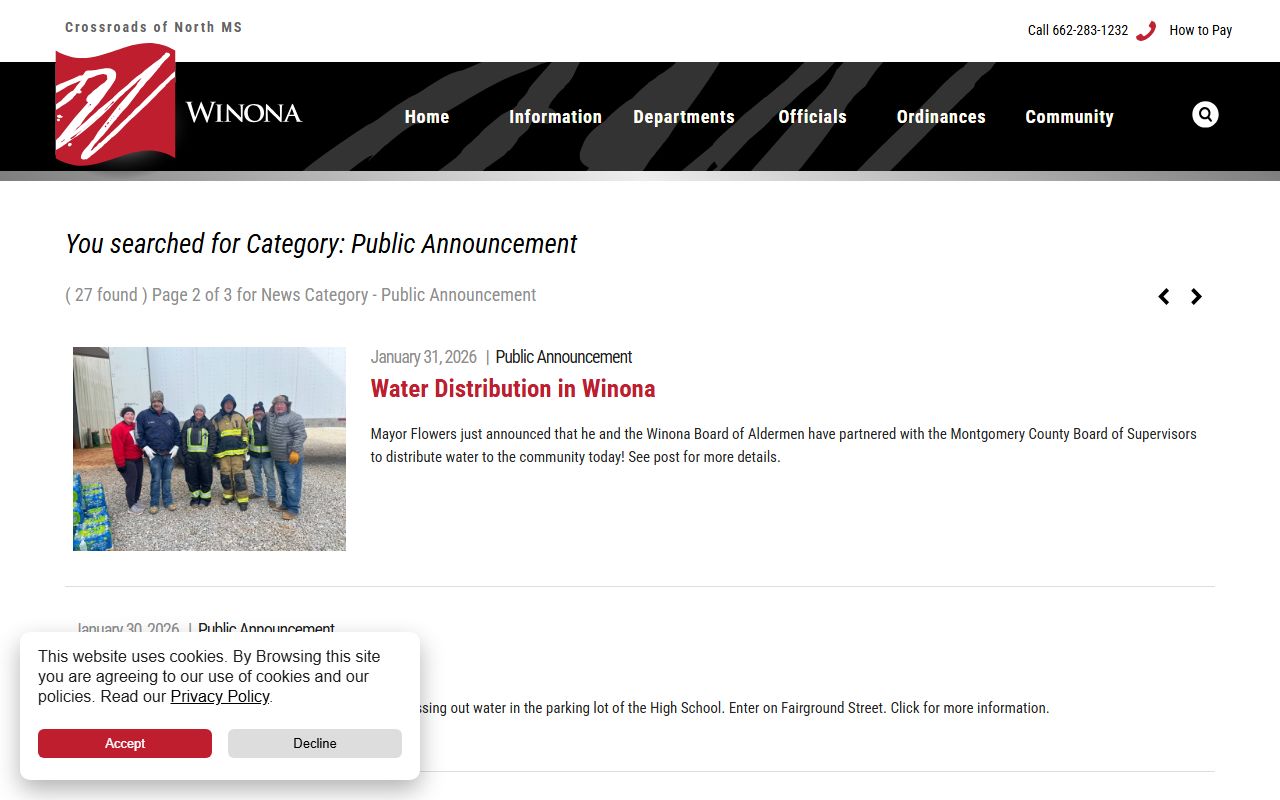
Checking that archive before a court date can save a wasted trip and prevent a missed appearance that triggers a bench warrant.
Who Issues Montgomery County Warrants
Each court level controls the warrants it creates, so the right phone number depends on the underlying case. Misdemeanor, traffic, and unpaid-fine warrants usually trace back to Justice Court or Winona Municipal Court. Felony capias and indictment warrants run through Circuit Court. The Sheriff's Department is the agency that actually serves and arrests, so it is the place to ask about custody, surrender, and service status. The table below maps the common warrant sources to a direct contact.
| Office | Warrant Type Handled | Phone |
|---|---|---|
| Sheriff's Department | Arrest-warrant status, custody, surrender, service | 662-283-3343 |
| Justice Court | Misdemeanor, traffic, failure to appear, unpaid fines, felony preliminary | 662-283-2290 |
| Winona Municipal Court | City failure to appear, municipal fines, city citations | 662-283-1140 |
| Circuit Court | Felony capias, indictment warrants, post-conviction matters | 662-283-4161 |
| Chancery Court | Contempt and child-support or court-order enforcement | 662-283-2333 |
If you are not sure which court signed the order, start with the charge. A speeding ticket points to Justice Court or the city. A felony arrest points to Circuit Court and the sheriff. A missed support payment points to Chancery Court. When a person is already in custody, the sheriff can also confirm booking details, and county jail questions overlap with inmate records handled by that same office.
Types of Montgomery County Warrants
Warrant is a broad word. The label on the order tells you why it exists and what clears it. The definitions below cover the kinds of warrants and holds used around Montgomery County, written in plain terms. Some are criminal, some grow out of missed court dates, and one common hold is not a court warrant at all.
- Arrest warrant
- A judge's order that authorizes police to arrest a named person for a criminal allegation.
- Bench warrant
- An order a judge signs from the bench, often after someone misses a scheduled court appearance.
- Failure-to-appear warrant
- A frequent result in traffic, municipal, and Justice Court cases when a defendant skips a hearing or payment date.
- Capias
- A court process to take a person into custody after a missed appearance or another unmet court order.
- Search warrant
- An order allowing officers to search a place or property. It is usually sealed and not public while active.
- Fugitive warrant or hold
- A warrant or detainer involving another jurisdiction, such as a charge or escape from a different county or state.
- Contempt or support enforcement
- An order that can arise from Chancery domestic cases, including child-support and other court-order violations.
- ICE detainer
- An immigration hold or request, not a county-court warrant. Confirm this kind of hold with the jail or the federal agency directly.
The same person can have more than one warrant in different courts at once. A traffic failure-to-appear in the city and a felony capias in Circuit Court are separate matters that each need their own resolution.
How to Check a Montgomery County Warrant
Because there is no public warrant portal, checking takes a few targeted calls. Start with the office most likely to hold the order, then widen out if needed. Always be ready to give a full name and date of birth so the clerk or deputy can pull the right record. Many people ask a lawyer to make these calls, since asking about your own warrant can sometimes lead to an arrest.
Justice Court warrants are common because that court hears misdemeanors, traffic tickets, and felony preliminary matters. Statewide guidance on how Mississippi justice courts work is collected at Mississippi Justice Court Help, which explains the kinds of cases and orders these courts handle.
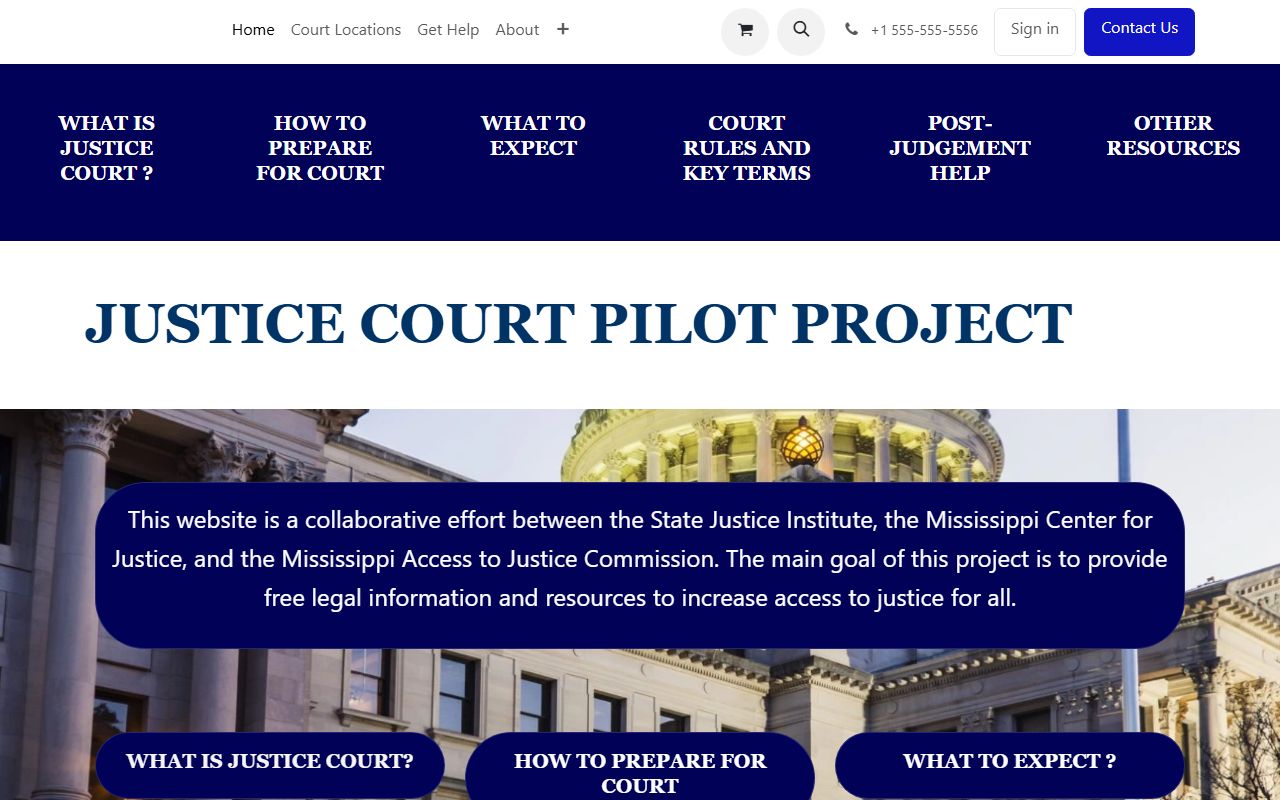
Reviewing that resource first can help you frame the right questions before you call the Montgomery County clerk. For city citations, the Winona Municipal Court is a separate stop, since municipal warrants do not show up in Justice Court files. Felony matters and indictment warrants belong to Circuit Court, where filed felony cases and judgments connect to the broader criminal court records kept by the Circuit Clerk.
Tip: Confirm each court separately, because a single county website will not list warrants and one office cannot see another court's active orders.
What Information to Ask For
When a clerk or deputy confirms a warrant, the verbal answer can be brief. Knowing which details to request makes the call useful and tells you what it will take to clear the order. No official sample warrant listing is published for the county, so the field set below reflects what to ask about rather than a screen you can pull up. Write down each answer as you go.
| Field | What to Ask For |
|---|---|
| Name and date of birth | Confirm the warrant matches the right person and is not a name mix-up. |
| Warrant number | The identifier the office uses, if it can be shared. |
| Issuing court | Which court signed the order, since that controls how it clears. |
| Charge or case | The underlying allegation, ticket, or case behind the warrant. |
| Bond amount and type | Whether a bond is set, and whether it is cash, surety, or property. |
| Court date | Any hearing already scheduled in the matter. |
| Surrender or payment instructions | How to turn yourself in or pay, and where. |
These same fields matter whether the warrant is a traffic failure-to-appear or a felony capias. A bond amount tells you the likely cost of release. A scheduled court date may mean the matter can be reset rather than resolved at a jail window.
How to Resolve an Outstanding Warrant
Clearing a warrant is a process, not a single payment. The right order of steps protects you and keeps the matter from getting worse. The steps below follow the path most Montgomery County residents take when they learn an order is active.
- Call the issuing court or the Sheriff's Department before you appear anywhere in person.
- Ask whether the warrant is active, whether a bond is set, whether a payment can clear it, and whether a court appearance is required.
- Do not rely on the county website alone, because no warrant database is published there.
- For traffic and municipal issues, check Justice Court and Winona Municipal Court separately, since each holds its own warrants.
- If you have a lawyer, have counsel contact the court about a motion to recall the warrant, reset the case, or arrange a surrender plan.
- After the matter is resolved, ask the court how long clearance takes and whether the sheriff needs a copy of the recall or order.
Important: Talk to a lawyer before you turn yourself in, since a single call can lead to immediate arrest and bond decisions you cannot easily undo.
Public Records Request as a Fallback
When no office posts a warrant online and a phone call does not give you a written copy, the Mississippi Public Records Act is the backup. The act, found at Mississippi Code Sections 25-61-1 through 25-61-15 and summarized by the Mississippi Ethics Commission, lets any person request public records from a public body. Send a specific written request to the Sheriff's Department or to the court that issued the order. Identify the person, the approximate date, and the record you want. Fees are limited to the actual cost of search, review, copying, and mailing.
A records request will not unlock everything. Active investigations, sealed warrants, juvenile matters, and law-enforcement-sensitive material can be withheld. Even so, the request creates a written trail and can produce a copy of a served or closed warrant that a quick phone call cannot.
Court records are not the same as a driving history. A traffic warrant clears in the court, but the related driver-license consequences live with the state. The Mississippi Department of Public Safety explains how to request a record through its driver records department, which handles motor-vehicle records separately from any court file.
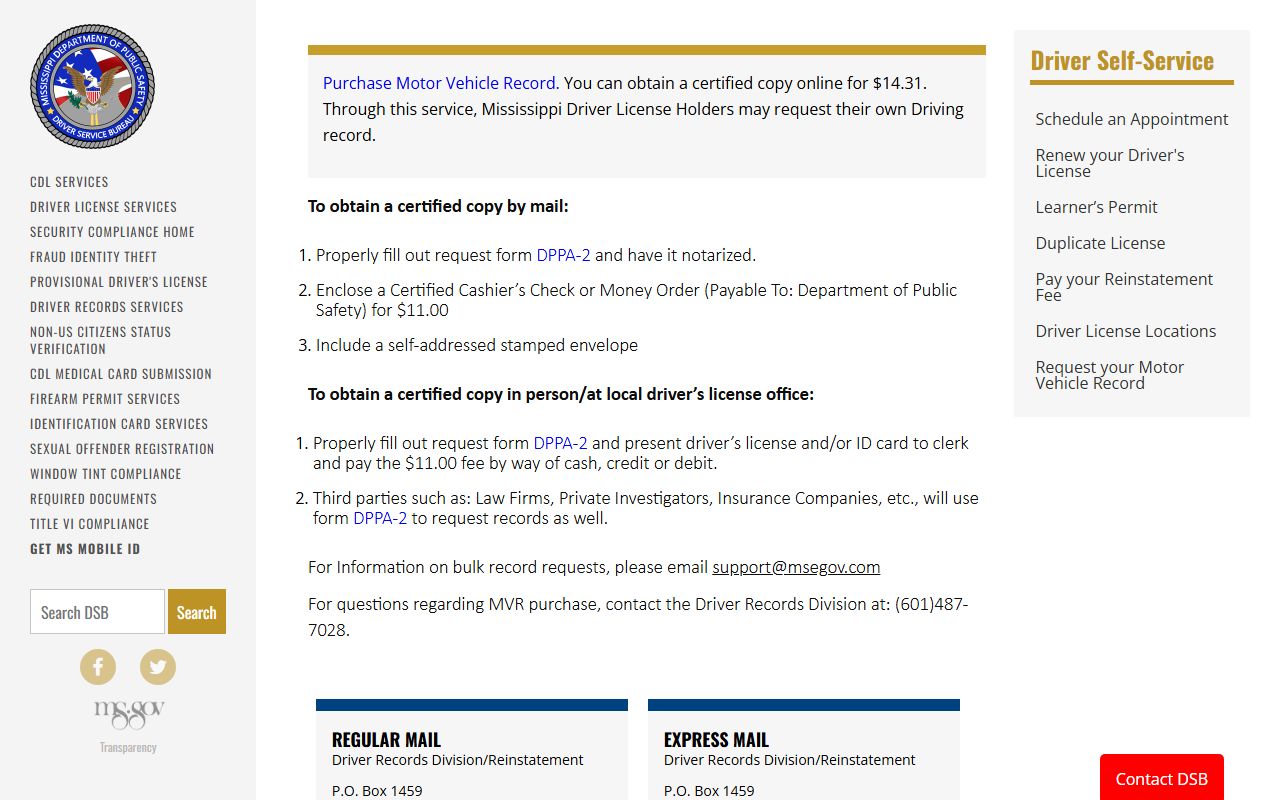
Pulling a driver record after a traffic warrant is resolved helps confirm that any license hold or suspension has actually been lifted.
Restricted Montgomery County Warrant Records
Not every warrant is open to the public, and that limit is built into the law. Search warrants are usually sealed while an investigation is active, so they will not appear in any public file until they are returned and unsealed. Juvenile and youth-court matters are confidential under Mississippi law and are not disclosed except under youth-court rules or a court order.
Federal warrants are a separate system entirely. They do not run through the Montgomery County courthouse and belong to the federal courts and agencies, so the county clerks cannot confirm them. Records tied to expunged or sealed cases are also restricted, and a public-records request is not the tool to open them. The person seeking that material must qualify under the relevant law or hold a court order.
Note: When an office withholds a warrant record, ask which exemption applies, since that answer tells you whether a court order or a different agency is the proper next step.