
What Probate Covers in Montgomery County
Probate is the court process that settles a person's affairs after death. It also covers living people who cannot handle their own money or care. In Montgomery County, these matters are Chancery Court records. The Chancery Clerk keeps the files. Estates of decedents, wills filed for probate, guardianships of minors, conservatorships of disabled adults, minor settlements, and insurance settlements paid to children all run through this court. Mental health commitments and many land and title questions tied to an estate also land here.
Mississippi splits its trial courts by subject. Chancery Court is the equity court. It hears estates, guardianships, conservatorships, divorce, custody, adoption, and property disputes. That makes the Chancery side the home for nearly every probate record a family might need. Felony crimes and large civil suits go to Circuit Court instead. Small claims and traffic matters go to Justice Court. So when the question involves a will, an estate, or a guardian, the path leads to the Chancery Clerk and not to any other county office.
Probate Terms Defined
Probate files use words that rarely come up in daily life. A quick guide helps when you read a petition, a court order, or a letter from the clerk. The terms below appear again and again across Montgomery County estate and guardianship records.
- Testator
- The person who made the will. A testator names who should get their property and who should carry out the plan.
- Executor
- The person named in a will to settle the estate. The executor pays debts, gathers assets, and gives out what is left.
- Intestate
- Dying without a valid will. State law then decides who inherits, and the court appoints someone to manage the estate.
- Administrator
- The person the court appoints to settle an estate when there is no will or no named executor able to serve.
- Guardianship
- A court arrangement where one person is named to care for a minor or for the person of someone who cannot care for themselves.
- Conservatorship
- A court arrangement where one person is named to manage the money and property of an adult who cannot manage their own.
- Letters testamentary
- The court paper that proves an executor has legal power to act for an estate. Banks and others ask to see it.
How to Search Montgomery County Chancery Court
There is no county online portal for probate. No public website lets you type a name and pull an estate file in Montgomery County. The reliable route is direct contact with the Chancery Clerk. Reach Ryan Wood's office by phone, email, mail, fax, or a walk-in visit. Staff can check the index and tell you whether a case exists, who the parties are, and what stage it has reached. Have your search details ready before you call.
- Gather what you know. The decedent or protected person's full name helps most. Add an approximate death date, a filing year, and any heir or personal representative name.
- Contact the Chancery Clerk at 662-283-2333, by email to ryanwood@montgomerycountyms.com, or in person at 614 Summit Street in Winona. Mail goes to P.O. Box 71.
- Give the staff a case number if you have one. If not, ask them to search by name and year. Ask whether the file is open, closed, archived, sealed, or restricted.
- Request copies of the documents you need. Note whether you want plain copies or certified copies for legal use.
- For older files or larger copy jobs, send a written public records request. Mississippi law gives you a path when a record is not handled over the phone.
Montgomery County Probate Office
One office holds the probate records for the county. The Chancery Clerk serves as Clerk of the Chancery Court and keeps estate, guardianship, and conservatorship files. Ryan Wood holds the post. The office sits inside the county courthouse on Summit Street in Winona. The three judges of the Third Chancery District, Hon. Mitchell M. Lundy Jr., Hon. Percy L. Lynchard Jr., and Hon. Vicki Cobb Daniels, hear the cases, but day to day records work runs through the clerk.
Montgomery County Chancery Clerk
Ryan Wood, Chancery Clerk
614 Summit Street, P.O. Box 71
Winona, MS 38967
662-283-2333
Fax: 662-283-2233
Note: The Chancery Clerk also records deeds, mortgages, and liens, so land matters tied to an estate often start in the same office.
Probate Filing Fees in Montgomery County
Montgomery County does not publish a probate fee list in its official material. The table below marks each item as not published rather than guessing a number. Costs change and vary by case type, so confirm the current charge with the Chancery Clerk before you file or order copies.
| Item | Amount |
|---|---|
| Opening an estate | Not published, confirm with clerk |
| Guardianship or conservatorship filing | Not published, confirm with clerk |
| Letters testamentary | Not published, confirm with clerk |
| Certified copy | Not published, confirm with clerk |
| Plain copy | Not published, confirm with clerk |
| Recording an estate land instrument | Not published, confirm with clerk |
Under the Mississippi Public Records Act, a public office may charge a fee that reflects the actual cost of searching, reviewing, copying, and mailing a record. That rule lives in Mississippi Code Section 25-61-7. It sets the ceiling for copy costs when a published probate fee does not exist. Always ask for the total before you commit so there is no surprise at the counter.
What Montgomery County Probate Records Show
An estate file builds over the life of a case. Early papers open the matter. Later papers wind it down. A complete probate record can show who died, who serves as executor or administrator, what the estate owns, what it owes, and who finally receives the property. The same office keeps guardianship and conservatorship files, which track who protects a child or a disabled adult and how that person manages the money.
Common documents in a Montgomery County probate file include the items below. Not every case holds all of them, and some details may be limited when a minor or a protected adult is involved.
- Wills filed for probate and the order admitting the will
- Estate administration petitions and letters testamentary or letters of administration
- Inventory and accounting filings listing assets and spending
- Creditor notice and claim materials
- Orders approving sale, settlement, or distribution
- Guardianship, conservatorship, and minor settlement papers
- Land and title documents connected to an estate
Probate Versus Federal Bankruptcy
Estates and debt sometimes cross paths. When a person dies owing money, or when a family business fails, people confuse probate with bankruptcy. They are not the same court. Probate is a Montgomery County Chancery Court matter handled by the local Chancery Clerk. Bankruptcy is a federal case. It runs through the U.S. Bankruptcy Court for the Northern District of Mississippi, not through any county office. An estate with heavy debt may still settle in Chancery Court, while a separate bankruptcy filing moves through the federal system entirely.
To understand where federal filings live, start with the bankruptcy court itself. The U.S. Bankruptcy Court for the Northern District of Mississippi publishes its rules, locations, and clerk contacts online.
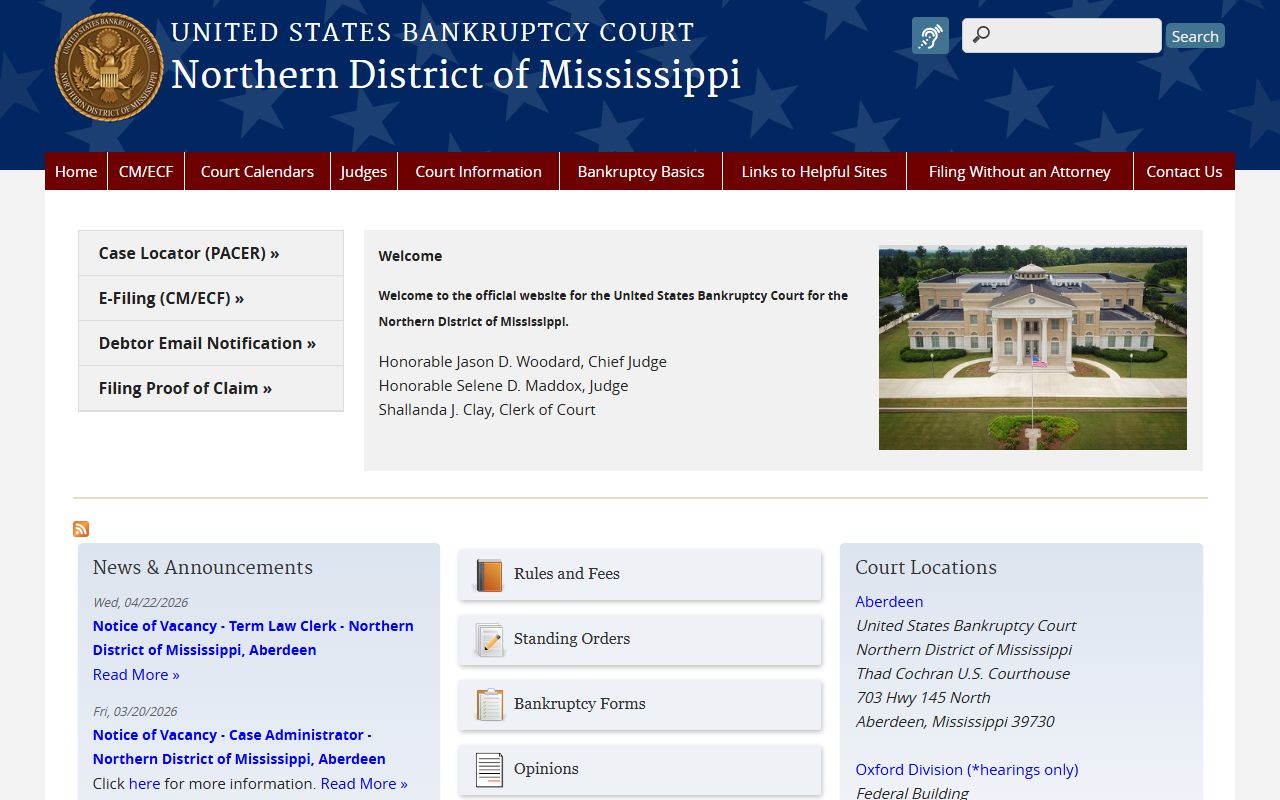
That court sits in Aberdeen and is separate from the Winona courthouse where probate files are kept. Filing and docket access there run through an electronic system rather than a paper counter.
Lawyers and the public reach those federal dockets through CM/ECF. The Northern District bankruptcy CM/ECF page explains how an account links to the wider federal records network.
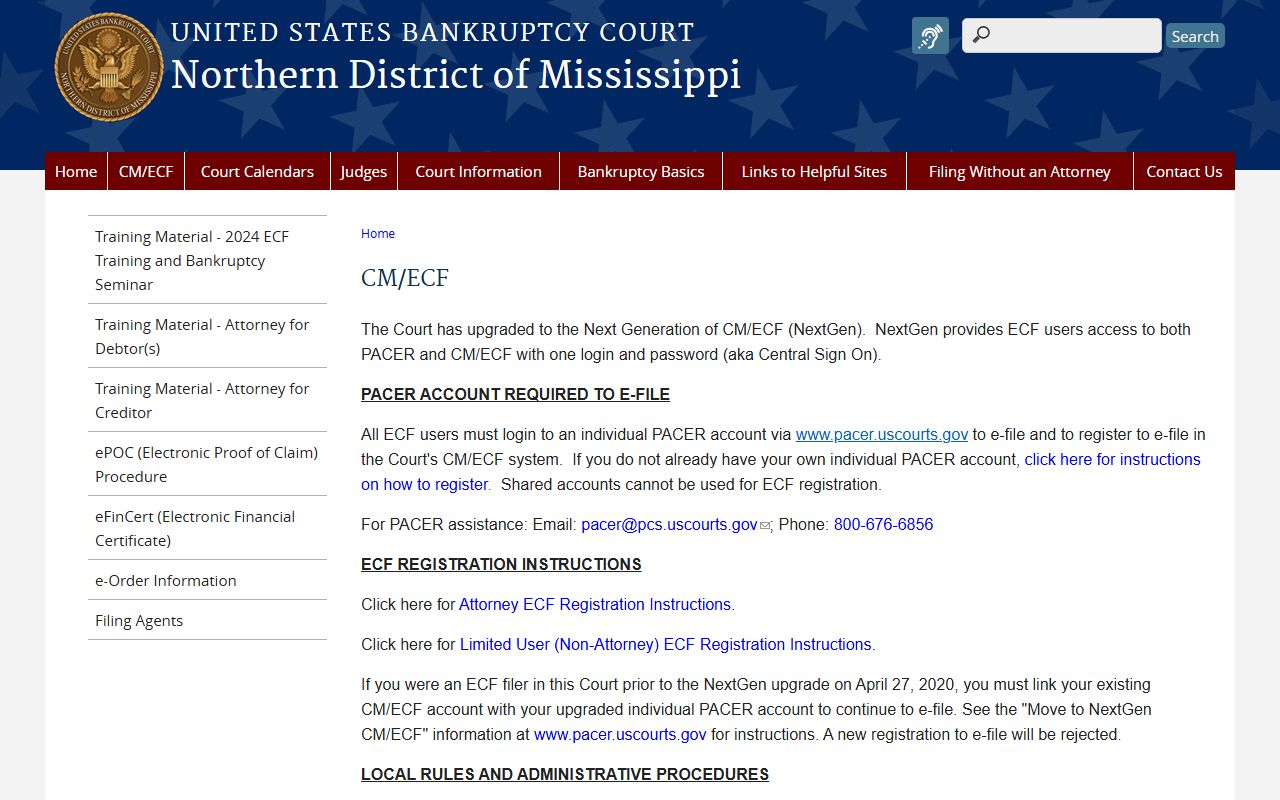
Every CM/ECF user logs in with a PACER account to file or view case documents. PACER is the national gateway for federal court records.
To set up or confirm access, use the official court lookup. The PACER court lookup for the Mississippi Northern Bankruptcy Court lists the court address, phone, and help desk details.
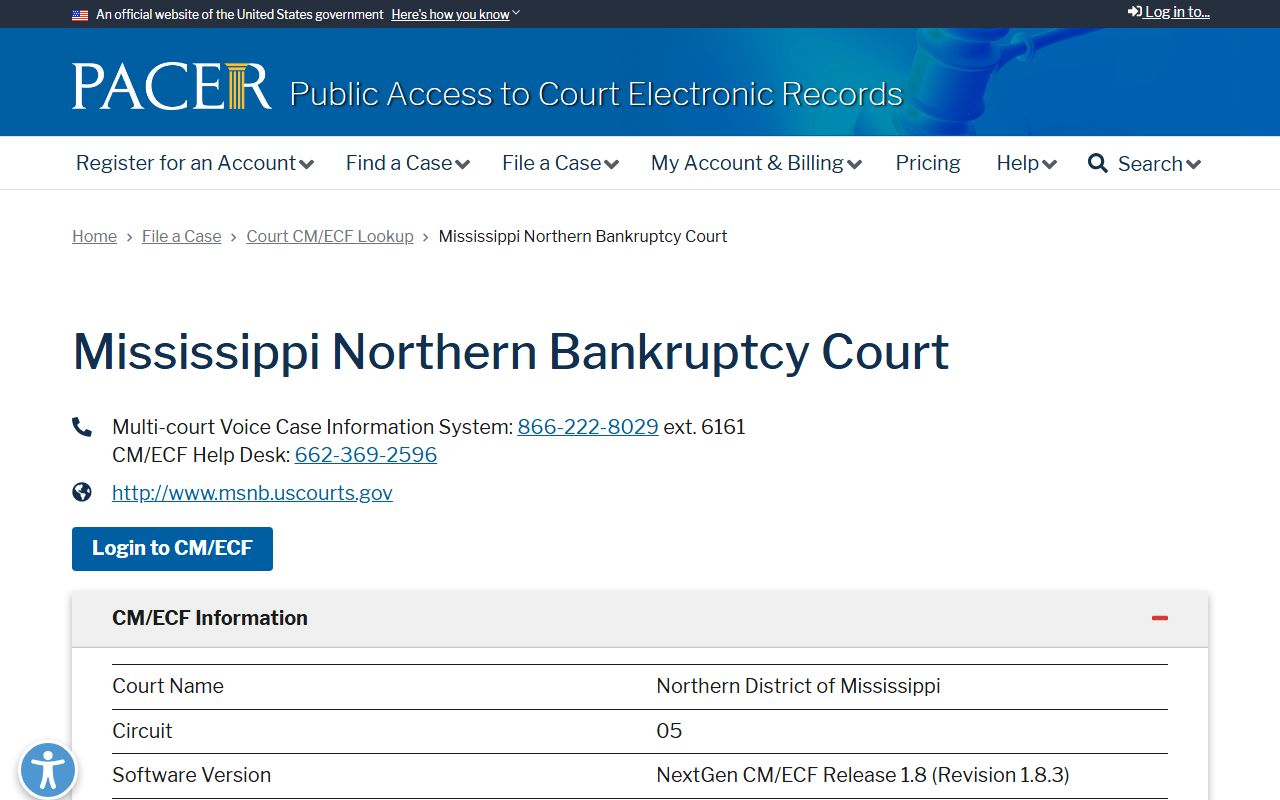
Keep the two systems clear in your mind. For a will or an estate in Winona, call the Chancery Clerk. For a bankruptcy, use the federal court and PACER. Mixing them up sends a request to the wrong building.
Restricted Probate Records
Not every probate file is fully open. Mississippi protects sensitive content even inside public court records. Guardianship and conservatorship files often involve minors or disabled adults, so parts may be sealed or withheld. Mental health commitment records are sensitive and should not be treated as open online files. Adoption matters, which the same court hears, are restricted as well.
Personal details get shielded across the board. Social Security numbers, financial account numbers, and the identities of protected children may be redacted before a copy is released. When you ask the clerk for a file, ask up front whether any part is sealed or limited. If a record is truly closed, a public records request will not open it. The person seeking it usually needs to qualify under the law or obtain a court order from a Chancery judge.
Note: Always confirm with the Chancery Clerk whether a guardianship, conservatorship, or commitment file is restricted before you rely on its contents.